
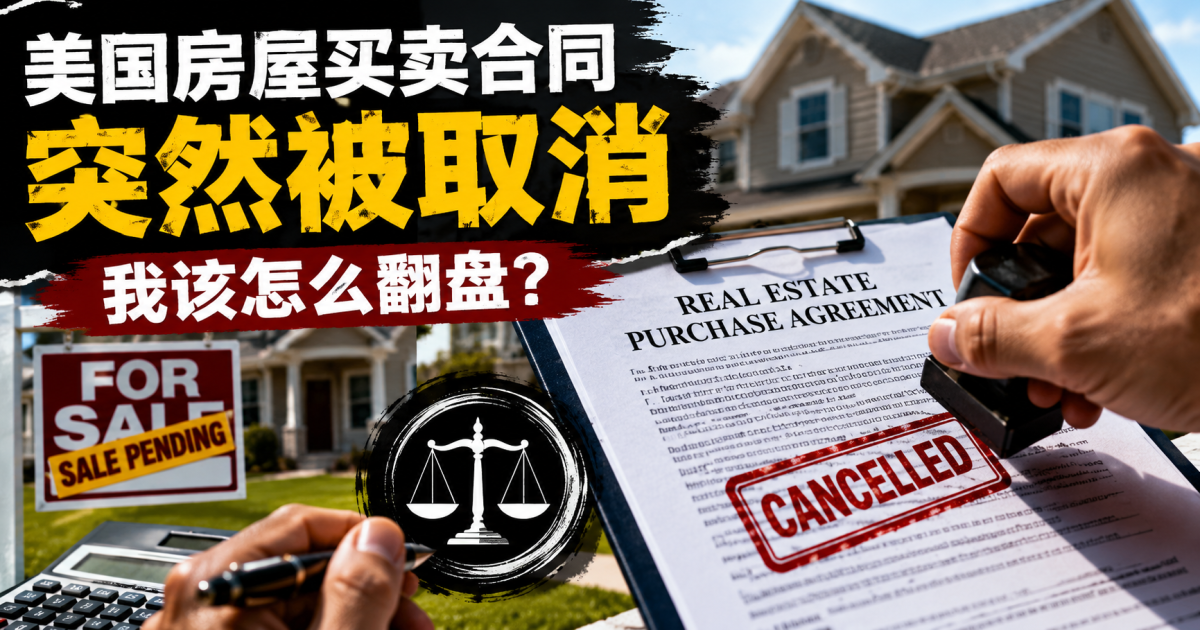
美国房屋买卖合同突然被取消我该怎么翻盘
【中国观察2026年07月05日讯】美国房地产买卖合同突然被取消,表面上看似平静,实际上却往往暗流汹涌。前一刻,你还在憧憬着新家的墙面该刷什么颜色、后院该摆什么样的烧烤架;下一刻,邮箱里却收到一封写着“交易终止”(Deal Terminated)的邮件,仿佛这只是一个再普通不过的星期二。如果你曾经历过这样的情况,就会明白,这绝不仅仅是一纸合同作废那么简单。即使所有人都告诉你“这只是生意”,那种失落感依然会让人觉得格外真实,甚至像是一种个人打击。
许多人没有意识到,在美国房地产市场,一份购房合同并不是刻在石头上的承诺,而更像是一座精心搭建的积木塔。它建立在各种条件和期限之上,包括房屋检查、贷款审批、房屋估价、法律条款,甚至还有买卖双方的耐心和情绪。只要其中任何一个环节出现问题,整笔交易都有可能迅速崩塌,就像家庭烧烤聚会上一把廉价折叠椅,稍不留神便会瞬间散架。
那么,当一笔房屋交易被取消时,究竟会发生什么?答案首先取决于交易进行到了哪个阶段。如果交易仍处于合同附带条件(Contingencies)期间,例如房屋检查、贷款审批或房屋估价尚未完成,那么这仍属于相对宽松的“退出阶段”。只要双方按照合同规定行事,无论买方还是卖方,都有机会以较小的代价终止交易。事实上,大多数购房合同的取消都发生在这一阶段,而且原因往往没有人们想象得那么戏剧化。有时是贷款机构突然收紧了审批标准;有时是一份房屋检查报告令人触目惊心,屋顶老化、地基开裂、管道问题层出不穷;还有一些时候,则是买方在最后关头打了退堂鼓,只不过把这种犹豫包装成了“市场前景存在不确定性”。
真正容易让人误解的是,许多买家认为,一旦卖方接受了自己的报价,这栋房子就已经属于自己了。然而,美国房地产交易并不是这样运作的。报价被接受,只意味着交易的大门刚刚打开,真正考验人的,是随后的交割(Closing)阶段。整个过程就像收到了一场宴会的邀请函,却还必须依次通过几道安检、背景调查以及财务审核,最终才能真正走进会场,成为这套房屋的合法拥有者。
然而,如果所有合同附带条件都已经解除之后,交易才突然取消,情况就会变得复杂得多。这时,买方支付的诚意金(Earnest Money)可能面临损失,双方也可能因此产生法律纠纷。到了这个阶段,房地产经纪人的措辞往往会变得格外谨慎,律师开始介入,而买卖双方则会反复翻阅合同中的每一项条款,仿佛在破解一部晦涩难懂的古代文献,希望从中找到对自己有利的依据。
不过,很多人容易忽略的一点是,交易取消并不一定意味着失败。在很多情况下,它反而是一种及时止损。对于买家来说,如果房屋检查发现了严重问题,选择退出交易,或许能够避免未来数万美元甚至更多的维修支出;而对于卖家而言,如果后来出现条件更好的备选买家,接受更高的报价,也可能让自己的利益实现最大化。换句话说,当下看似是一场令人沮丧的失败,实际上很可能只是让事情重新回到更合理的发展方向。
然而,从情感上来说,人们往往很难如此理性地看待这件事。尤其是对于首次购房者而言,在美国,拥有一套属于自己的房子,不仅意味着一个居住空间,更代表着身份、稳定,以及人们常说的“美国梦”。因此,当一笔交易最终告吹时,人们失去的并不仅仅是一栋房子,更像是失去了那个早已在脑海中开始规划、憧憬和布置的未来。
那么,当这样的情况真的发生时,接下来又该怎么办呢?
大多数人在得知交易取消后的第一反应都是惊慌失措,这很正常。但真正有效的应对策略,并不是停留在情绪之中,而是在冷静下来之后开始分析问题。此时,最重要的问题并不是“为什么偏偏发生在我身上”,而是“究竟是交易中的哪一个环节出了问题”。因为只有找出真正失败的原因,才能决定下一步该如何应对。
如果问题出在贷款融资方面,解决办法通常也具有针对性,例如改善个人信用记录、调整贷款类型、提高首付款比例,或更换另一家贷款机构。在美国,房屋贷款审批并不是一张永久有效的“通行证”,它只是金融机构根据申请人在某一时间点的财务状况所作出的判断。只要收入、负债、信用评分或贷款政策发生变化,审批结果也可能随之改变。换句话说,改变财务状况,就有可能改变贷款结果。
如果交易失败的原因来自房屋检查,那么接下来考验的往往就是双方的谈判能力。许多买家误以为,一旦检查报告发现问题,交易就只能终止。事实上,并非如此。尤其是在房屋销售速度放缓的市场中,卖家通常更愿意重新协商,而不是重新挂牌出售。无论是降低售价、提供维修补贴,还是由卖方承担部分维修费用,都远比许多人想象的更加常见。
如果问题出在房屋估价上,情况往往更加令人头疼。银行决定贷款金额时,依据的是专业估价机构给出的房屋价值,而不是买卖双方的主观判断,更不会因为网络平台上的房价预测而提高贷款额度。不过,即便如此,也并非毫无解决办法。买卖双方仍可以重新协商成交价格,买方也可以自行补足估价与成交价之间的差额;在某些特殊情况下,还可以申请重新估价,为交易争取新的机会。
除此之外,还有一个经常被人忽视,却又至关重要的因素,那就是时机。房地产市场从来不仅仅关乎一栋房子,更关乎市场周期。利率会上升,也会下降;市场上的房源数量会增加,也会减少。因此,一笔上个月还无法成交的交易,到了下个月,或许就会因为贷款环境改善、库存变化或市场走势调整而重新变得可行。正因为如此,经验丰富的投资者很少把一次交易失败看成最终结局,他们更愿意把它视为一次市场反馈、一组值得分析的数据,从中寻找下一次成功交易的机会。
从法律角度来看,每一次交易取消都会留下完整的书面记录。在美国,合同具有极高的法律效力,而房地产买卖合同的设计理念,并不是假设所有交易都会一帆风顺,而是充分考虑到交易过程中可能出现的各种变数。因此,合同中才会设置房屋检查、贷款审批、房屋估价等附带条件(Contingencies),为买卖双方提供合理的退出机制。这并非制度存在漏洞,而是一种务实的制度设计。起草这些合同的律师,从来不是假定一切都会完美进行,而是假定交易过程中总会出现一些可以预见的问题,并提前为这些情况制定解决方案。
然而,从情感层面来说,大多数人并不会如此冷静地看待交易取消。买家往往会觉得自己遭到了拒绝,卖家有时则会认为自己的房子被否定了价值,而房地产经纪人则夹在双方之间,努力把彼此的失望转化为下一步的解决方案。但市场本身并不会因为任何人的情绪而停下脚步,它只会不断调整,然后继续向前。
真正把经验丰富的买家与容易受挫的买家区分开的,并不是他们是否从未遇到交易失败,而是他们看待问题的角度。成熟的买家不会只问:“这笔交易会不会成功?”他们更关心的是:“如果这笔交易最终没有成功,我应该怎么办?”正是这种提前准备各种可能性的思维方式,让交易取消变得可以承受,而不是成为一次毁灭性的打击。
有意思的是,许多人只有亲身经历过一次交易失败之后,才会发现一个颇具讽刺意味的事实:第二笔交易往往比第一笔更加顺利,也更加适合自己。这并不是因为运气突然变好了,而是因为掌握的信息更多了。你会更加了解贷款机构的审批流程,能够更准确地阅读房屋检查报告,也会在谈判时表现得更加冷静和理性。你不再一味追求所谓的“完美房屋”,而是开始根据现实情况作出更成熟、更务实的选择。
因此,当一份美国房地产买卖合同最终被取消时,它并不意味着走到了终点,更像是导航系统重新规划了一条新的路线。这条新路线或许会让你付出更多时间,也可能让你经历情绪上的失落,甚至增加一些额外成本,但它很少是真正意义上的“死胡同”,除非你自己决定就此放弃。
房地产市场不会因为一笔交易失败而停下来。房屋依然会继续挂牌出售,买家之间仍然会展开竞争,贷款利率也会随着经济环境不断变化。真正发生改变的,其实是你对整个房地产交易体系的理解。当你真正明白这个市场是如何运作的时候,那些曾经让你感到沮丧甚至无奈的经历,往往会在下一次购房时帮助你作出更明智的决定,也可能为你节省一笔可观的资金。
归根结底,在美国买房,从提出报价到最终拿到房屋产权,从来都不是一条笔直的大道,而更像是一座不断变化的迷宫。交易被取消,并不代表你迷失了方向,更不意味着你失败了。它只是让你意外发现了迷宫中的一条出口,也让你对这座迷宫有了更深入的认识。下一次再走进去时,你将比第一次更加从容,也更接近自己的目标。
The sudden cancellation of a real estate purchase agreement in the United States is one of those moments that feels calm on the surface but absolutely chaotic underneath. One minute you’re imagining paint colors and backyard grills, the next minute you’re staring at an email that says “deal terminated” like it’s just another Tuesday. If you’ve ever been in that situation, you already know it’s not just paperwork—it feels personal, even if everyone tells you it’s “just business.”
What most people don’t realize is that in the U.S. housing market, a purchase agreement isn’t a promise carved in stone. It’s more like a carefully balanced stack of conditions, deadlines, inspections, financing approvals, appraisal results, legal clauses, and sometimes even emotional patience. And if one of those pieces tilts the wrong way, the whole thing can collapse faster than a cheap folding chair at a family barbecue.
So what actually happens when a deal gets canceled? First, it depends on where you are in the process. If you’re still in the contingency period—inspection, financing, appraisal—you’re in the “soft exit” phase. That means either party can walk away with limited penalties, assuming they follow the contract rules. This is where most cancellations happen, and surprisingly, it’s not always dramatic. Sometimes it’s a lender who suddenly tightens standards. Sometimes the inspection report reads like a horror novel: roof issues, foundation cracks, plumbing nightmares. Sometimes it’s just cold feet disguised as “market uncertainty.”
The tricky part is that buyers often assume once an offer is accepted, the house is basically theirs. That’s not how American real estate works. Acceptance just opens the door. The actual closing process is where the real stress lives. It’s like being invited to a party but still needing to pass three security checkpoints, a background check, and a financial interrogation before you’re allowed inside.
Now, if a deal is canceled after contingencies are removed, things get more serious. Earnest money can be at risk, and legal arguments can start to appear. That’s when real estate agents suddenly start speaking in very careful tones, lawyers get involved, and everyone starts rereading documents like they’re decoding ancient scripts.
But here’s the part most people don’t think about: cancellation isn’t always failure. In fact, in many cases, it’s damage control. A buyer walking away after a bad inspection might be saving themselves tens of thousands in repairs. A seller accepting a higher backup offer might be optimizing their financial outcome. In other words, what feels like a disaster in the moment can actually be a correction of direction.
Still, emotionally, it doesn’t feel that way. Especially for first-time buyers in the U.S., where homeownership is tied to identity, stability, and what people casually call the “American Dream.” When a deal falls apart, it doesn’t just feel like losing a house. It feels like losing a future you already started decorating in your head.
So what do you do when it happens?
The first instinct for most people is panic. That’s normal. But the real strategy starts after the panic settles. The key question is not “why did this happen to me,” but “which part of the deal actually failed.” Because that determines your next move.
If it was financing, the solution is usually structural: improve credit profile, adjust loan type, increase down payment, or switch lenders. Mortgage approvals in the U.S. are not static approvals; they are snapshots of your financial life at a specific moment. Change the moment, change the outcome.
If it was inspection-related, you’re looking at negotiation power. Some buyers don’t realize they can re-enter the conversation after a bad report. Sellers often prefer renegotiation over relisting, especially in slower markets. Price adjustments, repair credits, or partial fixes are all on the table more often than people think.
If it was appraisal issues, that’s where things get mathematically frustrating. The bank only lends based on appraised value, not emotional value or Zillow optimism. But even here, there are workarounds: renegotiation, additional cash, or a second appraisal in some cases.
And then there’s the most underrated factor in all of this—timing. Real estate is not just about property. It’s about cycles. Interest rates shift, inventory changes, and suddenly a deal that didn’t work last month becomes reasonable again next month. That’s why experienced investors rarely treat one cancellation as a final verdict. They treat it as a data point.
From a legal standpoint, every cancellation leaves a paper trail. And in the U.S., contracts matter. Real estate agreements are designed to anticipate failure, not avoid it. That’s why they include contingencies in the first place. It’s not weakness in the system; it’s built-in realism. Lawyers didn’t design housing contracts assuming everything would go perfectly. They designed them assuming things would go slightly wrong in predictable ways.
Emotionally, though, people don’t process it like that. Buyers often feel rejected. Sellers sometimes feel insulted. Agents feel stuck in the middle trying to translate disappointment into next steps. But the market doesn’t care about feelings—it resets and moves on.
What separates experienced buyers from frustrated ones is perspective. Seasoned buyers don’t ask “will this deal work?” They ask “what happens if it doesn’t?” That mindset alone changes everything. It makes cancellations survivable instead of devastating.
And here’s the irony most people only learn after going through it once: the second deal is usually better than the first. Not because luck improves, but because information improves. You understand lenders better, you read inspection reports differently, you negotiate more calmly. You stop imagining perfection and start planning reality.
So when a U.S. housing contract gets canceled, it’s not the end of the road. It’s a reroute. Sometimes painful, sometimes expensive in time and emotion, but rarely final unless you let it be.
The market will keep moving. Houses will still sell. Buyers will still compete. Rates will still fluctuate. The only thing that really changes is your understanding of how the system actually works—and that knowledge, inconvenient as it feels in the moment, is usually what saves you money the next time around.
In the end, real estate in America isn’t a straight line from offer to ownership. It’s more like a negotiation maze with moving walls. And getting a deal canceled doesn’t mean you failed the maze. It just means you found one of the exits you didn’t expect, and now you know where it is.
许多人没有意识到,在美国房地产市场,一份购房合同并不是刻在石头上的承诺,而更像是一座精心搭建的积木塔。它建立在各种条件和期限之上,包括房屋检查、贷款审批、房屋估价、法律条款,甚至还有买卖双方的耐心和情绪。只要其中任何一个环节出现问题,整笔交易都有可能迅速崩塌,就像家庭烧烤聚会上一把廉价折叠椅,稍不留神便会瞬间散架。
那么,当一笔房屋交易被取消时,究竟会发生什么?答案首先取决于交易进行到了哪个阶段。如果交易仍处于合同附带条件(Contingencies)期间,例如房屋检查、贷款审批或房屋估价尚未完成,那么这仍属于相对宽松的“退出阶段”。只要双方按照合同规定行事,无论买方还是卖方,都有机会以较小的代价终止交易。事实上,大多数购房合同的取消都发生在这一阶段,而且原因往往没有人们想象得那么戏剧化。有时是贷款机构突然收紧了审批标准;有时是一份房屋检查报告令人触目惊心,屋顶老化、地基开裂、管道问题层出不穷;还有一些时候,则是买方在最后关头打了退堂鼓,只不过把这种犹豫包装成了“市场前景存在不确定性”。
真正容易让人误解的是,许多买家认为,一旦卖方接受了自己的报价,这栋房子就已经属于自己了。然而,美国房地产交易并不是这样运作的。报价被接受,只意味着交易的大门刚刚打开,真正考验人的,是随后的交割(Closing)阶段。整个过程就像收到了一场宴会的邀请函,却还必须依次通过几道安检、背景调查以及财务审核,最终才能真正走进会场,成为这套房屋的合法拥有者。
然而,如果所有合同附带条件都已经解除之后,交易才突然取消,情况就会变得复杂得多。这时,买方支付的诚意金(Earnest Money)可能面临损失,双方也可能因此产生法律纠纷。到了这个阶段,房地产经纪人的措辞往往会变得格外谨慎,律师开始介入,而买卖双方则会反复翻阅合同中的每一项条款,仿佛在破解一部晦涩难懂的古代文献,希望从中找到对自己有利的依据。
不过,很多人容易忽略的一点是,交易取消并不一定意味着失败。在很多情况下,它反而是一种及时止损。对于买家来说,如果房屋检查发现了严重问题,选择退出交易,或许能够避免未来数万美元甚至更多的维修支出;而对于卖家而言,如果后来出现条件更好的备选买家,接受更高的报价,也可能让自己的利益实现最大化。换句话说,当下看似是一场令人沮丧的失败,实际上很可能只是让事情重新回到更合理的发展方向。
然而,从情感上来说,人们往往很难如此理性地看待这件事。尤其是对于首次购房者而言,在美国,拥有一套属于自己的房子,不仅意味着一个居住空间,更代表着身份、稳定,以及人们常说的“美国梦”。因此,当一笔交易最终告吹时,人们失去的并不仅仅是一栋房子,更像是失去了那个早已在脑海中开始规划、憧憬和布置的未来。
那么,当这样的情况真的发生时,接下来又该怎么办呢?
大多数人在得知交易取消后的第一反应都是惊慌失措,这很正常。但真正有效的应对策略,并不是停留在情绪之中,而是在冷静下来之后开始分析问题。此时,最重要的问题并不是“为什么偏偏发生在我身上”,而是“究竟是交易中的哪一个环节出了问题”。因为只有找出真正失败的原因,才能决定下一步该如何应对。
如果问题出在贷款融资方面,解决办法通常也具有针对性,例如改善个人信用记录、调整贷款类型、提高首付款比例,或更换另一家贷款机构。在美国,房屋贷款审批并不是一张永久有效的“通行证”,它只是金融机构根据申请人在某一时间点的财务状况所作出的判断。只要收入、负债、信用评分或贷款政策发生变化,审批结果也可能随之改变。换句话说,改变财务状况,就有可能改变贷款结果。
如果交易失败的原因来自房屋检查,那么接下来考验的往往就是双方的谈判能力。许多买家误以为,一旦检查报告发现问题,交易就只能终止。事实上,并非如此。尤其是在房屋销售速度放缓的市场中,卖家通常更愿意重新协商,而不是重新挂牌出售。无论是降低售价、提供维修补贴,还是由卖方承担部分维修费用,都远比许多人想象的更加常见。
如果问题出在房屋估价上,情况往往更加令人头疼。银行决定贷款金额时,依据的是专业估价机构给出的房屋价值,而不是买卖双方的主观判断,更不会因为网络平台上的房价预测而提高贷款额度。不过,即便如此,也并非毫无解决办法。买卖双方仍可以重新协商成交价格,买方也可以自行补足估价与成交价之间的差额;在某些特殊情况下,还可以申请重新估价,为交易争取新的机会。
除此之外,还有一个经常被人忽视,却又至关重要的因素,那就是时机。房地产市场从来不仅仅关乎一栋房子,更关乎市场周期。利率会上升,也会下降;市场上的房源数量会增加,也会减少。因此,一笔上个月还无法成交的交易,到了下个月,或许就会因为贷款环境改善、库存变化或市场走势调整而重新变得可行。正因为如此,经验丰富的投资者很少把一次交易失败看成最终结局,他们更愿意把它视为一次市场反馈、一组值得分析的数据,从中寻找下一次成功交易的机会。
从法律角度来看,每一次交易取消都会留下完整的书面记录。在美国,合同具有极高的法律效力,而房地产买卖合同的设计理念,并不是假设所有交易都会一帆风顺,而是充分考虑到交易过程中可能出现的各种变数。因此,合同中才会设置房屋检查、贷款审批、房屋估价等附带条件(Contingencies),为买卖双方提供合理的退出机制。这并非制度存在漏洞,而是一种务实的制度设计。起草这些合同的律师,从来不是假定一切都会完美进行,而是假定交易过程中总会出现一些可以预见的问题,并提前为这些情况制定解决方案。
然而,从情感层面来说,大多数人并不会如此冷静地看待交易取消。买家往往会觉得自己遭到了拒绝,卖家有时则会认为自己的房子被否定了价值,而房地产经纪人则夹在双方之间,努力把彼此的失望转化为下一步的解决方案。但市场本身并不会因为任何人的情绪而停下脚步,它只会不断调整,然后继续向前。
真正把经验丰富的买家与容易受挫的买家区分开的,并不是他们是否从未遇到交易失败,而是他们看待问题的角度。成熟的买家不会只问:“这笔交易会不会成功?”他们更关心的是:“如果这笔交易最终没有成功,我应该怎么办?”正是这种提前准备各种可能性的思维方式,让交易取消变得可以承受,而不是成为一次毁灭性的打击。
有意思的是,许多人只有亲身经历过一次交易失败之后,才会发现一个颇具讽刺意味的事实:第二笔交易往往比第一笔更加顺利,也更加适合自己。这并不是因为运气突然变好了,而是因为掌握的信息更多了。你会更加了解贷款机构的审批流程,能够更准确地阅读房屋检查报告,也会在谈判时表现得更加冷静和理性。你不再一味追求所谓的“完美房屋”,而是开始根据现实情况作出更成熟、更务实的选择。
因此,当一份美国房地产买卖合同最终被取消时,它并不意味着走到了终点,更像是导航系统重新规划了一条新的路线。这条新路线或许会让你付出更多时间,也可能让你经历情绪上的失落,甚至增加一些额外成本,但它很少是真正意义上的“死胡同”,除非你自己决定就此放弃。
房地产市场不会因为一笔交易失败而停下来。房屋依然会继续挂牌出售,买家之间仍然会展开竞争,贷款利率也会随着经济环境不断变化。真正发生改变的,其实是你对整个房地产交易体系的理解。当你真正明白这个市场是如何运作的时候,那些曾经让你感到沮丧甚至无奈的经历,往往会在下一次购房时帮助你作出更明智的决定,也可能为你节省一笔可观的资金。
归根结底,在美国买房,从提出报价到最终拿到房屋产权,从来都不是一条笔直的大道,而更像是一座不断变化的迷宫。交易被取消,并不代表你迷失了方向,更不意味着你失败了。它只是让你意外发现了迷宫中的一条出口,也让你对这座迷宫有了更深入的认识。下一次再走进去时,你将比第一次更加从容,也更接近自己的目标。
The sudden cancellation of a real estate purchase agreement in the United States is one of those moments that feels calm on the surface but absolutely chaotic underneath. One minute you’re imagining paint colors and backyard grills, the next minute you’re staring at an email that says “deal terminated” like it’s just another Tuesday. If you’ve ever been in that situation, you already know it’s not just paperwork—it feels personal, even if everyone tells you it’s “just business.”
What most people don’t realize is that in the U.S. housing market, a purchase agreement isn’t a promise carved in stone. It’s more like a carefully balanced stack of conditions, deadlines, inspections, financing approvals, appraisal results, legal clauses, and sometimes even emotional patience. And if one of those pieces tilts the wrong way, the whole thing can collapse faster than a cheap folding chair at a family barbecue.
So what actually happens when a deal gets canceled? First, it depends on where you are in the process. If you’re still in the contingency period—inspection, financing, appraisal—you’re in the “soft exit” phase. That means either party can walk away with limited penalties, assuming they follow the contract rules. This is where most cancellations happen, and surprisingly, it’s not always dramatic. Sometimes it’s a lender who suddenly tightens standards. Sometimes the inspection report reads like a horror novel: roof issues, foundation cracks, plumbing nightmares. Sometimes it’s just cold feet disguised as “market uncertainty.”
The tricky part is that buyers often assume once an offer is accepted, the house is basically theirs. That’s not how American real estate works. Acceptance just opens the door. The actual closing process is where the real stress lives. It’s like being invited to a party but still needing to pass three security checkpoints, a background check, and a financial interrogation before you’re allowed inside.
Now, if a deal is canceled after contingencies are removed, things get more serious. Earnest money can be at risk, and legal arguments can start to appear. That’s when real estate agents suddenly start speaking in very careful tones, lawyers get involved, and everyone starts rereading documents like they’re decoding ancient scripts.
But here’s the part most people don’t think about: cancellation isn’t always failure. In fact, in many cases, it’s damage control. A buyer walking away after a bad inspection might be saving themselves tens of thousands in repairs. A seller accepting a higher backup offer might be optimizing their financial outcome. In other words, what feels like a disaster in the moment can actually be a correction of direction.
Still, emotionally, it doesn’t feel that way. Especially for first-time buyers in the U.S., where homeownership is tied to identity, stability, and what people casually call the “American Dream.” When a deal falls apart, it doesn’t just feel like losing a house. It feels like losing a future you already started decorating in your head.
So what do you do when it happens?
The first instinct for most people is panic. That’s normal. But the real strategy starts after the panic settles. The key question is not “why did this happen to me,” but “which part of the deal actually failed.” Because that determines your next move.
If it was financing, the solution is usually structural: improve credit profile, adjust loan type, increase down payment, or switch lenders. Mortgage approvals in the U.S. are not static approvals; they are snapshots of your financial life at a specific moment. Change the moment, change the outcome.
If it was inspection-related, you’re looking at negotiation power. Some buyers don’t realize they can re-enter the conversation after a bad report. Sellers often prefer renegotiation over relisting, especially in slower markets. Price adjustments, repair credits, or partial fixes are all on the table more often than people think.
If it was appraisal issues, that’s where things get mathematically frustrating. The bank only lends based on appraised value, not emotional value or Zillow optimism. But even here, there are workarounds: renegotiation, additional cash, or a second appraisal in some cases.
And then there’s the most underrated factor in all of this—timing. Real estate is not just about property. It’s about cycles. Interest rates shift, inventory changes, and suddenly a deal that didn’t work last month becomes reasonable again next month. That’s why experienced investors rarely treat one cancellation as a final verdict. They treat it as a data point.
From a legal standpoint, every cancellation leaves a paper trail. And in the U.S., contracts matter. Real estate agreements are designed to anticipate failure, not avoid it. That’s why they include contingencies in the first place. It’s not weakness in the system; it’s built-in realism. Lawyers didn’t design housing contracts assuming everything would go perfectly. They designed them assuming things would go slightly wrong in predictable ways.
Emotionally, though, people don’t process it like that. Buyers often feel rejected. Sellers sometimes feel insulted. Agents feel stuck in the middle trying to translate disappointment into next steps. But the market doesn’t care about feelings—it resets and moves on.
What separates experienced buyers from frustrated ones is perspective. Seasoned buyers don’t ask “will this deal work?” They ask “what happens if it doesn’t?” That mindset alone changes everything. It makes cancellations survivable instead of devastating.
And here’s the irony most people only learn after going through it once: the second deal is usually better than the first. Not because luck improves, but because information improves. You understand lenders better, you read inspection reports differently, you negotiate more calmly. You stop imagining perfection and start planning reality.
So when a U.S. housing contract gets canceled, it’s not the end of the road. It’s a reroute. Sometimes painful, sometimes expensive in time and emotion, but rarely final unless you let it be.
The market will keep moving. Houses will still sell. Buyers will still compete. Rates will still fluctuate. The only thing that really changes is your understanding of how the system actually works—and that knowledge, inconvenient as it feels in the moment, is usually what saves you money the next time around.
In the end, real estate in America isn’t a straight line from offer to ownership. It’s more like a negotiation maze with moving walls. And getting a deal canceled doesn’t mean you failed the maze. It just means you found one of the exits you didn’t expect, and now you know where it is.
作者:MNewsTV 编辑部 转载请注明作者、出处並保持完整。
分享 Facebook | X | WhatsApp | LinkedIn
捐助(Paypal): https://www.paypal.me/observeccp 订阅中国观察电报 Telegram : https://t.me/s/ObserveCCP
最新







更多推荐
- 早晨饮用有益肠道健康的饮品:专家推荐的饮品和古老的智慧
- 在印度尼西亚买房是否优于租房
- 如何利用指数基金在长期投资中保持稳定收益
- 大型科技公司如何压制自然健康真相
- 投资学生公寓的潜在机遇与长期风险
- 加拿大老年人财务管理中的法律陷阱
- 北美中产如何实现“年假三地”梦想
- 最实用的北美加密货币税务计算器
- 美国股东协议控制权争议竟然能用这个方法解决
- 法拉利最新限量跑车在技术层面上的突破令人印象深刻
- 财富积累后期如何避免决策质量下降
- 全球美元资产配置与风险控制策略
- 兰桂坊的微醺与回归前的忧郁
- 最新研究指出,某些食物可能损害大脑并增加认知能力下降的风险
- 海外收入如何合法避税的底层逻辑
- 资产保护法律工具详解
- 假新闻《纽约时报》继续利用虚假能源统计数据和气候谎言来推动其气候崇拜庞氏骗局议程
- 在现代生活里,过一点古人的日子
- 晨间灵丹妙药:热水如何激活整体健康
- 财富不是目的,平静才是奢侈
- 人工智能安全专家警告超级智能可能终结人类,同时揭露现实只是模拟
- 房产税变化对投资者的现金流和回报率的影响
- 学习新技能的黄金公式 不只是刻意练习
- 购入二手豪车需要警惕哪些隐藏维修历史
- 6种有助于自然降低胆固醇的草药补充剂
- 苦涩的余味:研究表明甜味剂的影响可能会波及子孙后代
- 加拿大税局越来越像FBI,高净值家庭如何提前布局税务防线
- 万物皆有缄默的语言,愿你听得懂
- 日本自主量子计算机突显科技主权
- 曼哈顿计划核遗留问题在美国城市重现,引发癌症恐慌
- 美国五分之一食品中仍含合成染料,联邦政府逐步淘汰合成染料的计划面临重重阻碍
- 投资养老地产是否真能带来稳定的长期收益
- 人工智能如何重塑全球供应链的运行逻辑
- 成功不等于幸福,只有结构才能带来稳定感
- 新兴行业投资风口解析
- 如何用LLC架构保护你的美国资产
- 加拿大研究表明堕胎与精神疾病住院风险增加有关
- 紧急警钟:即将到来的人工智能机器人大战与人类大团结
- 在算法洪流中守住真实:中国新一代对朴素价值的追寻
- 如何用REITs增加被动收入